Equipping a piano with two interchangeable actions so the player can swap depending on preference. Let’s unpack the concept carefully:
What “two actions” means
-
The action is the mechanical system that transfers finger movement to the hammer striking the string.
-
Different actions (e.g., lighter vs. heavier touch, traditional vs. modern geometry) can dramatically change the playing feel.
-
Swapping actions would be like changing the “engine” of the piano while keeping the same body and soundboard.
Potential Benefits
-
Customization: Pianists could choose a lighter action for fast repertoire or a heavier one for training strength.
-
Pedagogical use: Schools could demonstrate different touch responses without needing multiple instruments.
-
Longevity: If one action wears out, the second could be swapped in, reducing downtime.
-
Market differentiation: A manufacturer offering modular actions could stand out as innovative.
Technical Challenges
-
Precision alignment: The action must fit the keyboard and string geometry exactly; swapping requires millimeter accuracy.
-
Weight and resonance: Different actions may alter the balance of the instrument, affecting tone and regulation.
-
Storage and handling: A second action is bulky and delicate; safe storage and transport are issues.
-
Cost: Doubling actions increases manufacturing and servicing expenses.
-
Technician expertise: Each swap would require careful regulation; not a simple “plug-and-play.”
Real-world precedents
-
Concert grands: Some concert halls keep multiple actions for the same piano, pre-regulated for different pianists.
-
Research prototypes: A few experimental instruments have tested modular actions, but it’s rare in mass production.
What is a Steinway with Double Action?
It is an instrument specifically prepared for two different sets of actions. These two sets are instantly interchangeable. Most pianists get a feel for the tone through what they hear. Some do not even realise that this was the way the tuners prepared the instrument. For example, pianist John Lill was happy with the instrument he tried when he was here. We had to persuade him to try the second action, and he was utterly shocked at what he heard from the piano! He told us he could not believe it was the same instrument.
The technician in charge knows which of the two actions to show pianists. He knows how they play and what they need. Therefore,he has set up certain criteria based on my experience regarding certain pianists. It also matters in which concert venue these pianists will play. We have both the Royal Festival Hall and Queen Elisabeth Hall. An amateur will not hear any difference based on the acoustics in either hall, but the professional knows what will work in each environment.
Whenever a pianist is able to sit down and play without thinking about how he or she is doing it, the music just happens. If the pianist over-thinks everything, his or her inspiration suffers. We aim to ensure that the tone each pianist wants simply leaps from the instrument. We do not want the performer to need to think unnecessarily about it. The technician in charge has found that most performers prefer one action of the double Steinway or the other. As long as he has helped the performer find the proper sound by manipulating the voicing and regulation, he has done my job properly!
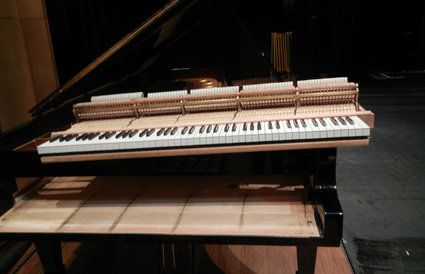
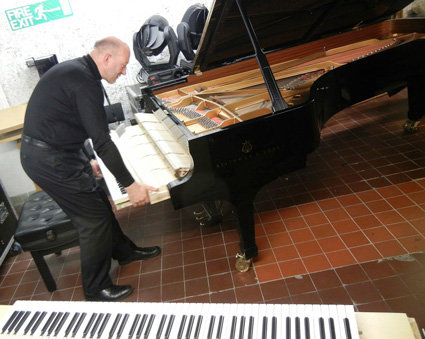
How can the Double Action facilitate for the performer?
We have deliberately prepared our set of instruments for any contingency. Through research, we know what all different types of pianists will seek. We have it all covered. Pianists do not sound the same. In that way, the Double Action supports a new way of thinking; you can even choose to play the second half of a recital with a totally different sound. This allows the performer to choose a different sound for different composers. Certain colors for certain types of music become available, creating a platform for those magical moments that are so rare and only happens in great performances.
From: PianoStreet
Leave a Reply